


How ChondroFiller’s Keyhole Surgery Approach is Transforming Minimally Invasive Cartilage Repair
Introduction: A New Era in Cartilage Repair
Cartilage injuries are a frequent cause of joint pain and restricted movement, often arising from injury, wear and tear, or conditions like osteoarthritis. Since cartilage has limited ability to heal itself, effective treatments are vital to restore joint function and improve quality of life. Minimally invasive surgical options are becoming increasingly popular with patients because they generally cause less trauma, involve smaller incisions, speed up recovery, and carry fewer risks than traditional surgery.
In this article, we explore why ChondroFiller—a cutting-edge collagen-based treatment—is gaining recognition as a minimally invasive solution for cartilage repair, using keyhole surgery techniques. Under the experienced care of Professor Paul Lee, an expert in orthopaedics and rehabilitation, patients at the London Cartilage Clinic benefit from advanced treatment delivered within a supportive and professional setting. We'll look at how the procedure works, what makes it different from traditional surgery, and what patients can expect from start to finish.
What Does ‘Minimally Invasive Surgery’ Mean in Orthopaedics?
In orthopaedics, ‘minimally invasive’ surgery means performing the necessary treatment using the smallest possible cuts and causing the least damage to surrounding tissues. Keyhole surgery, or arthroscopy, is a prime example. It involves making tiny incisions just large enough to insert specialised instruments and a tiny camera. This allows surgeons to see inside the joint and carry out procedures with great precision.
This approach reduces muscle and tissue damage around the joint, limits bleeding and scarring, and leads to less pain after the operation. It is particularly important for cartilage repair, as cartilage is delicate and has very limited blood supply. Minimising disturbance to healthy tissue helps promote a better healing environment and allows patients to get back to their daily lives sooner.
How ChondroFiller Works with Keyhole Surgery
ChondroFiller is a unique, cell-free collagen matrix designed to repair cartilage defects by acting as a scaffold that supports the body’s own cartilage cells to grow and regenerate damaged tissue. The treatment is delivered through keyhole surgery, involving a very small incision often just a few millimetres wide.
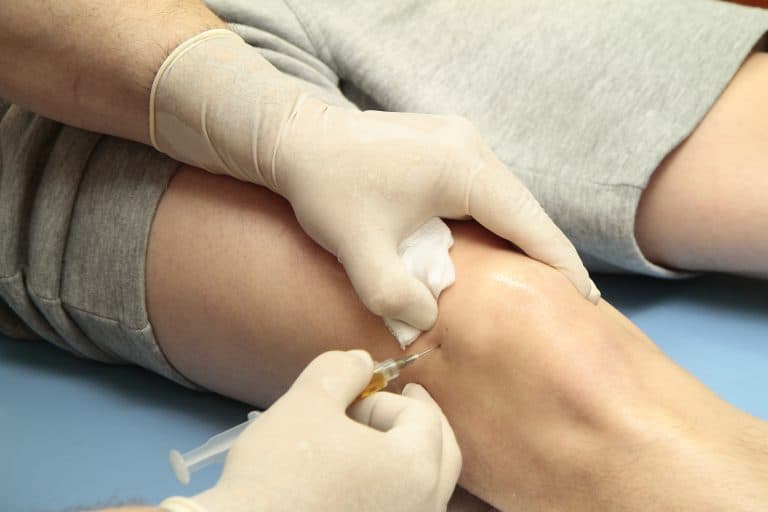
During the procedure, Professor Paul Lee carefully injects the ChondroFiller directly into the damaged cartilage area using a guided camera to ensure perfect placement. This ‘small incision, low impact’ method preserves the surrounding joint tissues and structure. Recent research notes that “ChondroFillerliquid shows the most pronounced viscous effects,” meaning it absorbs and adapts well to the stresses inside joints (Weizel et al., 2020). A surgical technique study also praises the method as “simple, inexpensive, and reproducible,” making it an efficient option for implanting biological materials during arthroscopy (Perez-Carro et al., 2021).
Another study highlights that ChondroFiller “forms a protective layer around the cartilage defect while stimulating the growth of chondrocytes,” the specialised cells that produce cartilage, helping tissue regeneration (Corain et al., 2023). Thanks to this minimally invasive approach, patients typically experience less pain and faster recovery as the new cartilage takes hold.
Free non-medical discussion
Not sure what to do next?
Information only · No medical advice or diagnosis.
Why ChondroFiller Stands Out Compared to Traditional Techniques
Traditional cartilage repair often requires larger cuts and more invasive procedures, such as microfracture surgery or grafting, which can cause more pain, swelling, and complications like infection or stiffness.
ChondroFiller’s keyhole approach avoids these issues by cutting down on surgical trauma and sparing healthy tissue. Studies show that “both cartilage and ChondroFillerliquid contain fibrillar components, but the latter constitutes a bi-phasic structure,” which supports strong integration with the body’s own cartilage (Weizel et al., 2020). It is also described as “a liquid cell-free collagen matrix used in a one-step arthroscopic procedure for treating full-thickness cartilage defects” (Perez-Carro et al., 2021).
Clinical evaluations reveal that patients experience “improvement in pain symptoms, along with increased strength in gripping and pinching movements” following ChondroFiller treatment (Corain et al., 2023). Patients benefit from shorter hospital stays and quicker rehab, making the overall experience more comfortable and effective.

What Patients Can Expect: Preparation, Procedure and Recovery
At the London Cartilage Clinic, patients receive thorough assessments including imaging and clinical evaluations to ensure the treatment is suitable for their specific condition.
During the keyhole procedure, Professor Paul Lee and his expert team focus on patient comfort and precision. Because the surgery involves only tiny incisions, patients typically report minimal discomfort and are encouraged to begin gentle movement and rehabilitation soon after.
The clinic emphasises ongoing support through personalised rehabilitation plans and expert advice, helping patients regain joint function safely and confidently. This supportive care helps reduce anxiety, which can greatly benefit the healing process.
Conclusion: A Gentle Yet Powerful Approach to Cartilage Repair
ChondroFiller’s combination of keyhole surgery, tiny incisions, and minimal tissue disruption represents a significant step forward in cartilage repair. It provides a safer, less painful alternative to conventional surgery while encouraging effective cartilage regeneration.
Thanks to the expertise of Professor Paul Lee and the dedicated team at London Cartilage Clinic, patients receive innovative care tailored to their needs and supported throughout their recovery.
For personalised medical advice, always consult a qualified healthcare professional.
References
Corain, M., Zanotti, F., Giardini, M., Gasperotti, L., Invernizzi, E., Biasi, V., & Lavagnolo, U. (2023). The Use of an Acellular Collagen Matrix ChondroFiller® Liquid for Trapeziometacarpal Osteoarthritis.
Perez-Carro, L., Rosi Mendoza Alejo, P., Gutierrez Castanedo, G., Menendez Solana, G., Fernandez Divar, J. A., Galindo Rubin, P., & Alfonso Fernandez, A. (2021). Hip chondral defects: Arthroscopic treatment with the needle and curette technique and ChondroFiller. Arthroscopy Techniques, 10(6), e1455-e1461. https://doi.org/10.1016/j.eats.2021.03.011
Weizel, A., Distler, T., Schneidereit, D., & Friedrich, O. (2020). Complex mechanical behavior of human articular cartilage and hydrogels for cartilage repair. Acta Biomaterialia, 111, 205-216. https://doi.org/10.1016/j.actbio.2020.10.025
Frequently Asked Questions
- The London Cartilage Clinic offers advanced cartilage repair options with a focus on minimally invasive techniques, expert care, and tailored patient support, overseen by renowned cartilage specialist Professor Paul Lee, ensuring each patient receives world-class treatment in a supportive environment.
- Professor Paul Lee is a leading cartilage expert, serving as Regional Surgical Ambassador and advisor to the Royal College of Surgeons of Edinburgh, with extensive experience in orthopaedics and cartilage repair, ensuring patients benefit from the very latest in surgical techniques and medical understanding.
- ChondroFiller keyhole surgery uses smaller incisions, minimises trauma, and supports faster recovery compared to traditional open techniques. Guided by Professor Paul Lee, this method preserves healthy tissue while aiding cartilage regeneration with advanced, clinically proven collagen-based materials.
- Patients at the London Cartilage Clinic undergo comprehensive assessments and careful planning. Under Professor Lee’s skilled care, procedures are minimally invasive, aimed at comfort and safety, with personalised rehabilitation and ongoing support to encourage confident recovery and optimal joint function.
- Minimally invasive cartilage repair leads to less pain, faster recovery and lower risks. Professor Paul Lee’s expertise in advanced keyhole techniques ensures the best possible preservation of healthy tissue, allowing patients to return to daily activities with less disruption and greater satisfaction.
Legal & Medical Disclaimer
This article is written by an independent contributor and reflects their own views and experience, not necessarily those of London Cartilage Clinic. It is provided for general information and education only and does not constitute medical advice, diagnosis, or treatment.
Always seek personalised advice from a qualified healthcare professional before making decisions about your health. London Cartilage Clinic accepts no responsibility for errors, omissions, third-party content, or any loss, damage, or injury arising from reliance on this material.
If you believe this article contains inaccurate or infringing content, please contact us at [email protected].
London Cartilage Clinic
Modern treatments, designed for lasting knee outcomes
Every treatment plan is selected to help you return to the quality of life you deserve. Our team combines up-to-date techniques with consultant-led decision making across cartilage repair, regeneration and replacement.
What your journey can look like
Step 01
Consultant-Led Assessment
Symptoms, imaging and goals reviewed in one structured appointment.
Step 02
Personalised Treatment Plan
A clear route chosen from repair, regeneration or replacement options.
Step 03
Precision Delivery
Modern techniques and specialist equipment matched to your diagnosis.
Step 04
Long-Term Knee Health
Follow-up guidance focused on durable function and quality of life.
Will the Arthrosamid work for me
PAAG-8+ Questionnaire
A bright, structured entry point for patients exploring Arthrosamid. The questionnaire helps frame suitability, expectations, and 24-month clinical benefit discussion before a fuller consultant-led review.
Designed for shared decision-making. It does not replace specialist consultation, examination, imaging review, or formal medical advice.